Search This Blog

Wednesday, December 30, 2009


Nokia N900


Monday, December 28, 2009

The Year's Most Amazing Scientific Images


Installing a Neural Microelectrode Array: An array of microelectrodes connects with the brain, potentially allowing paralyzed patients to control computer interfaces with their minds. Courtesy Kelly Johnson/University of Utah Department of Neurosurgery
Each issue of Popular Science opens with Megapixels--two of the most amazing images from the world of science and technology that month. Here, we've compiled them all from 2009 for your viewing pleasure, with some additional images from years past and present added to the mix.

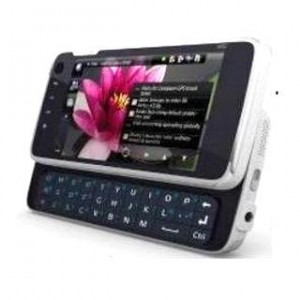
Nokia N810


By
Mobilewhack.com
on April 1, 2008 9:29 PM | Permalink


Nokia unveiled its latest N-series device, the Nokia N810 Internet Tablet - WiMAX Edition. The first device from Nokia to take advantage of WiMAX networks, the N810 is a pocket device that unleashes a full Internet experience while on the go. Unlike Wi-Fi which has a range of a few hundred feet, WiMAX allows for a larger area with each base station capable of reaching a radius of 2-3 miles.

The WiMAX Edition of N810 features a 4.13 inch touch screen along with a slider QWERTY keyboard. A host of popular apps, including IM, Skype, Google Talk and Gizmo5 are available to take advantage of VoIP calling. It also features built-in GPS and support for up to 10GB of memory, apart from microSD memory card slot.

Bundled with upgraded OS2008, the Nokia N810 features an enhanced email client, Chinese character rendering in the browser and software update capability.

The Nokia N810 Internet Tablet - WiMAX Edition will hit stores in summer 2008.


cturer Nokia[1]
Type Internet appliance
Media One miniSD slot, compatible with miniSD or microSD (with adapter) cards up to 32 GB
Operating system Maemo 4.1 (codename Diablo)
Power 1500 mAh BP-4L Battery
CPU 400 MHz TI OMAP 2420
Storage capacity 256 MB + 2 GB Flash
Memory 128 MB Random access memory
Display 800 × 480 resolution, 105 mm (4.13 in) diagonal, 88 pixels/cm, 225 ppi, 65536 colors (16-bit)
Input Keyboard/Touchscreen
Camera 640 × 480 VGA Camera (currently supports photos and video)
Connectivity IEEE 802.11b, IEEE 802.11g, Bluetooth 2.0, USB 2.0
Dimensions 72 * 128 * 14 mm
Weight 226 g
Predecessor Nokia N800
Successor Nokia N900


The Nokia N810 Internet Tablet is an Internet appliance from Nokia, announced on 17 October, 2007 at the Web 2.0 Summit in San Francisco. Despite Nokia's strong association with cellular products, the N810 is not a phone, but instead allows the user to browse the Internet and communicate using Wi-Fi networks or with a mobile phone via Bluetooth. It builds on the hardware and software of the Nokia N800 with some features added and some removed.

The Nokia N810 features the Maemo Linux distribution,[2] based on Maemo 4.0, which features MicroB (a Mozilla-based mobile browser), a GPS navigation application, new media player, and a refreshed interface.

Nokia N810

Nokia unveiled its latest N-series device, the Nokia N810 Internet Tablet - WiMAX Edition. The first device from Nokia to take advantage of WiMAX networks, the N810 is a pocket device that unleashes a full Internet experience while on the go. Unlike Wi-Fi which has a range of a few hundred feet, WiMAX allows for a larger area with each base station capable of reaching a radius of 2-3 miles.

The WiMAX Edition of N810 features a 4.13 inch touch screen along with a slider QWERTY keyboard. A host of popular apps, including IM, Skype, Google Talk and Gizmo5 are available to take advantage of VoIP calling. It also features built-in GPS and support for up to 10GB of memory, apart from microSD memory card slot.

Bundled with upgraded OS2008, the Nokia N810 features an enhanced email client, Chinese character rendering in the browser and software update capability.

The Nokia N810 Internet Tablet - WiMAX Edition will hit stores in summer 2008.
cturer Nokia[1]
Type Internet appliance
Media One miniSD slot, compatible with miniSD or microSD (with adapter) cards up to 32 GB
Operating system Maemo 4.1 (codename Diablo)
Power 1500 mAh BP-4L Battery
CPU 400 MHz TI OMAP 2420
Storage capacity 256 MB + 2 GB Flash
Memory 128 MB Random access memory
Display 800 × 480 resolution, 105 mm (4.13 in) diagonal, 88 pixels/cm, 225 ppi, 65536 colors (16-bit)
Input Keyboard/Touchscreen
Camera 640 × 480 VGA Camera (currently supports photos and video)
Connectivity IEEE 802.11b, IEEE 802.11g, Bluetooth 2.0, USB 2.0
Dimensions 72 * 128 * 14 mm
Weight 226 g
Predecessor Nokia N800
Successor Nokia N900


The Nokia N810 Internet Tablet is an Internet appliance from Nokia, announced on 17 October, 2007 at the Web 2.0 Summit in San Francisco. Despite Nokia's strong association with cellular products, the N810 is not a phone, but instead allows the user to browse the Internet and communicate using Wi-Fi networks or with a mobile phone via Bluetooth. It builds on the hardware and software of the Nokia N800 with some features added and some removed.

The Nokia N810 features the Maemo Linux distribution,[2] based on Maemo 4.0, which features MicroB (a Mozilla-based mobile browser), a GPS navigation application, new media player, and a refreshed interface.


Nokia N810

Nokia unveiled its latest N-series device, the Nokia N810 Internet Tablet - WiMAX Edition. The first device from Nokia to take advantage of WiMAX networks, the N810 is a pocket device that unleashes a full Internet experience while on the go. Unlike Wi-Fi which has a range of a few hundred feet, WiMAX allows for a larger area with each base station capable of reaching a radius of 2-3 miles.

The WiMAX Edition of N810 features a 4.13 inch touch screen along with a slider QWERTY keyboard. A host of popular apps, including IM, Skype, Google Talk and Gizmo5 are available to take advantage of VoIP calling. It also features built-in GPS and support for up to 10GB of memory, apart from microSD memory card slot.

Bundled with upgraded OS2008, the Nokia N810 features an enhanced email client, Chinese character rendering in the browser and software update capability.

The Nokia N810 Internet Tablet - WiMAX Edition will hit stores in summer 2008.


cturer Nokia[1]
Type Internet appliance
Media One miniSD slot, compatible with miniSD or microSD (with adapter) cards up to 32 GB
Operating system Maemo 4.1 (codename Diablo)
Power 1500 mAh BP-4L Battery
CPU 400 MHz TI OMAP 2420
Storage capacity 256 MB + 2 GB Flash
Memory 128 MB Random access memory
Display 800 × 480 resolution, 105 mm (4.13 in) diagonal, 88 pixels/cm, 225 ppi, 65536 colors (16-bit)
Input Keyboard/Touchscreen
Camera 640 × 480 VGA Camera (currently supports photos and video)
Connectivity IEEE 802.11b, IEEE 802.11g, Bluetooth 2.0, USB 2.0
Dimensions 72 * 128 * 14 mm
Weight 226 g
Predecessor Nokia N800
Successor Nokia N900


The Nokia N810 Internet Tablet is an Internet appliance from Nokia, announced on 17 October, 2007 at the Web 2.0 Summit in San Francisco. Despite Nokia's strong association with cellular products, the N810 is not a phone, but instead allows the user to browse the Internet and communicate using Wi-Fi networks or with a mobile phone via Bluetooth. It builds on the hardware and software of the Nokia N800 with some features added and some removed.

The Nokia N810 features the Maemo Linux distribution,[2] based on Maemo 4.0, which features MicroB (a Mozilla-based mobile browser), a GPS navigation application, new media player, and a refreshed interface.


Robotic Knee Helps Perfectly Healthy Runners Run Even Better


Attention cyborg wonks and lazy people: Japanese scientists at Tsukuba University have created a motorized knee that you can attach to your leg to increase your muscle power and running speed. The 11-pound kit's weight is shared by an exoskeleton-like attachment for your leg and a power source that's carried in a small backpack. But here's the best part: the device is not designed with any kind of rehabilitation or handicap-assisting function in mind; it's simply to make it easier for regular folks to run faster!

Microsoft's Mobicast Stitches Together Multiple Cell Phone Videos in Real Time


If TMZ.com and Kate Moss have taught us anything, it’s that there’s a lot of cell phone video footage out there. Unlike TMZ.com and Kate Moss, researchers at Microsoft’s Labs in Cairo, Egypt are doing something cool with all that content , combining feeds from multiple phones capturing the same scene into multi-angle, live online broadcasts.

Panasonic Will Market First Li-Ion Storage Battery for Home Use in 2011


Bringing power storage to the people, Panasonic will bring a home-use lithium-ion storage cell to market in fiscal 2011, making it possible for homes to store a week's worth of electricity for later use. Panasonic -- along with the recently acquired Sanyo -- have already test-manufactured such a battery, which could allow for more widespread deployment of eco-friendly but inconsistent modes of power generation.

Thursday, December 24, 2009

Marvell launches worldwide Plug Computer competition


Six months ago, I had an exclusive First Look at Marvell's prototype plug-in computer, the SheevaPlug. Ever since, dozens of companies have contacted me about their applications. Most recently, CNET reviewed the Pogoplug from Cloud Engines.

That said, it didn't surprise me when Marvell announced Tuesday that 10,000 SheevaPlug units featuring Marvell CPU technology have shipped.

To celebrate this milestone, Marvell also announced Tuesday the launch of its worldwide Plug Computer developer competition, called "Free Your Imagination," to award the most innovative Plug Computing concept submitted.

You can participate or find out more about this competition at plugcomputer.org. This Web site is also the main Web resource for the plug application development community, where members can access software that facilitates the development of the SheevaPlug. Developers can also exchange ideas for free.

While the applications differ from one vendor to another, in a nutshell, Marvell's Plug Computer is a tiny unit, about the size of a small wall-plug power adapter.

Originally posted at Digital Media

Volume Slicing Display affords untethered 3D views


If you've seen the film "Avatar," you may have noticed one of the characters plucking a display panel from a desktop and continuing to use it as a standalone control screen. While we probably won't witness epic wars between human colonists and sapient humanoids in the near future, the technology depicted in the science fiction film is available in our current time, albeit in unrefined form.

At the recent computer graphics event Siggraph Asia 2009, a pair of researchers from the University of Tokyo's Ishikawa Komuro Laboratory demonstrated their Volume Slicing Display, a screen prototype developed for medical use. With it, radiologists would be able to view 3D imagery from a flat X-ray plate via a calibrated projector.

The technology essentially lets users experience 3D virtual objects in a physical environment. This could mean doctors visualizing cross sections of a brain in real time while walking around an operating theater

Messaging phones of 2009

We've already listed our top cell phones and smartphones of the year, but we think the messaging phone has emerged as a strong enough category in 2009 that we think it deserves a top-10 list of its very own. Not quite smartphones, these handsets have full QWERTY keyboards and are made mostly for sending text messages. They come in all different shapes and sizes, some with touch screens with plenty of multimedia features, and others with just a basic feature set.
Top messaging phones of 2009 (photos)


In picking our top-10 list, we chose the ones with the highest ratings that fit within our messaging phone category. The two most obvious are the Samsung Rogue and the LG enV Touch, which both won our Editors' Choice this year. In fact, Samsung and LG dominated this list in general, with stand-outs like the Samsung Impression and the LG Xenon. There were a couple of phones that aren't from those two manufacturers, but you'll have to take a look at our slideshow to find ...

Originally posted at Dialed In

What's behind new BlackBerry optical trackpad


Ever wonder how the optical trackpad on the newest BlackBerry phones works?

Research In Motion's official Inside BlackBerry blog has posted an explanation of the technology, and it turns out that the trackpad works much like the optical mouse you use with your desktop PC: it uses a low-resolution infrared camera to capture movement across the surface and translate it into direction.

Read more of "The science behind the new BlackBerry optical trackpad" at ZDNet's The ToyBox.

What's behind new BlackBerry optical trackpad

Ever wonder how the optical trackpad on the newest BlackBerry phones works?

Research In Motion's official Inside BlackBerry blog has posted an explanation of the technology, and it turns out that the trackpad works much like the optical mouse you use with your desktop PC: it uses a low-resolution infrared camera to capture movement across the surface and translate it into direction.

Read more of "The science behind the new BlackBerry optical trackpad" at ZDNet's The ToyBox.

Toaster looks, acts like printer


Swiss designer Othmar Muehlebach conceived of a toaster that not only looks like an inkjet printer, but also toasts bread like one.

The gizmo has an iMac-esque stand and you can drop the bread on the tray at the top, which will then feed the slices into a slot where it'll be toasted. This design won a second-place

What to expect at CES 2010

CES 2010 begins in Las Vegas on Thursday, January 7, but the press releases start rolling in long before that. The Buzz Out Loud crew took some time from our daily live show to talk a bit about what we expect to see at CES.


Originally posted at CNET TV

Hipster concept: Vacuum with an iPod dock


I am confused by the concept behind this new Electrolux vacuum cleaner.

The company has developed the technology for what it's calling the "quietest vacuum cleaner ever." But then it breaks the silence by incorporating an iPod dock and speakers into the thing. Yes, this quiet vacuum plays music.

It's just a concept at this point based on a study Electrolux did (PDF) on the effects of music on doing housework. But I could easily envision these quiet-but-loud machines hitting stores in the next year if the demand is strong enough. I see these as the world's first hipster vacuums.

I suppose I like the idea of making housework fun, but the elimination of noise to create more enjoyable noise is like gentrification of the soundwaves. I can't help but think about how it mirrors what's happening in cities around the globe as people are pushed out of their neighborhoods to make way for newer, hipper, higher-end housing.

Or maybe I've been reading too many social-theory books before bed.

Three free iPhone apps that make shopping easier


Shopping is supposed to be fun, dangit! But it's invariably a hassle-filled experience, especially at this time of year.

That's why I never walk into a store without these three iPhone apps at the ready. They're all free, and they make shopping faster, easier, and sometimes even a little less expensive.

CardStar Newly updated with an improved interface and support for 75 additional merchants, CardStar replaces various discount, reward, and membership cards in your wallet. To digitize a card, just enter a merchant name and your barcode number. When you get to the checkout, pull up the onscreen barcode and hand over your phone for scanning. Just don't toss your actual cards until you've done some trial runs, as some scanners have trouble recognizing the iPhone's screen.

pic2shop Suppose you're at Borders, about to plunk down your cash on Brendan Benson's "My Old, Familiar Friend" (good call--best album of 2009, IMHO), but then you wonder: Is this the best price? Find out fast with pic2shop, which scans product barcodes and quickly pulls up prices from thousands of online stores. The latest version offers vastly improved scanning, yet it's still a free app.

Point Inside I've been shopping at the same mall (Twelve Oaks in Novi, MI) since I was a kid, and I still get lost in the place. Where has Point Inside been all my life? This ingenious app provides maps for hundreds of U.S. malls and shopping centers. It can find the malls nearest you, list current mall events and promotions, and even remember where you parked. It's a little buggy, and missing a few major malls in my area, but definitely a great start and a must-have app for mallrats.

OK, shoppers: Those are my picks; now let's hear yours. Hit the comments and tell me about the apps that make your shopping life easier, cheaper, or just a little more fun.

Originally posted at iPhone Atlas

Wait! Nook arriving for Christmas after all


Customers who placed early orders for Barnes & Noble's Nook e-readers will get them in time for Christmas, the company said Wednesday, despite its statements to the contrary a few days ago.


Barnes & Noble: "Just kidding on that latest delay."
(Credit: Barnes & Noble)

Got whiplash yet?

On Friday, the retailer told some customers by e-mail that it aimed to get the device to customers by Thursday, Christmas Eve. Those who did not get the gadget in time would get an e-mail notification on Wednesday with a $100 Barnes & Noble online gift certificate, the company said.

It appears those gift certificates won't be showing up in in-boxes, however, as the Wall Street Journal reported Wednesday that all B&N's Nook shipping orders will in fact be fulfilled. "We're pleased to tell our customers today that we're shipping out all our orders in time," Mary Ellen Keating, a spokeswoman for Barnes & Noble, told the paper.

Various shifts in plans have plagued the Nook since B&N officially entered the burgeoning e-reader market in late October. At that point, customers placing early preorders were told they could expect the Nook to ship by the end of November.

In November, however, the bookseller pushed that date back, telling preorder customers they could expect shipment by December 11. The company declined to say how many e-readers had been preordered.

Then, later in November 20, B&N announced on its Web site that its e-reader, a challenger to Amazon's Kindle and Sony's Reader, is officially sold out through 2009 and customers ordering after that date wouldn't receive the device until January 4.

Wednesday, December 23, 2009

Tablet hint? Apple developers supersizing apps for January event


The Apple tablet is threatening to approach Yeti status, but here's an indication that it will turn out to be real: the company has told some of its key developers to prepare versions of their iPhone apps that will work on a device with a larger screen, in time for an event next month.

Add that to the news that Apple has reportedly booked the Yerba Buena Center for the Arts in San Francisco "for several days in late January," according to the Financial Times, and it's pretty easy to connect the dots. It's a very good bet we're getting a look at this thing within the next 30 days or so.


A mobile industry source tells me developers have been told that the mystery device will be shown off at the event only, but won't be ready to ship (Dan Frommer at Alley Insider relays the same news).

Announcing a product before launch used to be unusual for Apple, but it's a pattern the company has practiced more recently, notably with the first iPhone. And if Apple is indeed coming out with a new product that will require developers to rethink their approach, it makes a lot of sense.

I've asked Apple for comment, but I'm not holding my breath.

My source says Apple's instructions to developers indicate that the tablet--or at least the thing it's showing off next month--will be based on the iPhone OS and will rely on the same iTunes Store that has moved 2 billion apps in a couple of years.

Ford cars to become Wi-Fi hot spots

Ford cars are about to become true mobile hot spots.

The carmaker announced Monday the next generation of its Sync system designed to let Ford owners plug a USB modem directly into a car's built-in Wi-Fi, creating broadband Internet access to all passengers. Those in the car can jump online through any Wi-Fi-enabled device, from smartphone to laptop.


Credit: Microsoft


Ford said that this factory-installed capability will be available next year on certain Sync-equipped cars and that no extra hardware or subscriptions will be needed outside of an existing broadband modem, which the customer supplies. Ford's Wi-Fi system will include WPA2 security, ensuring that only people in the car will be able to hop onto the network.

"The speeds with which technology is evolving, particularly on the wireless front, makes obsolescence a real problem," Doug VanDagens, director of Ford's Connected Services Solutions Organization, said in a statement. "We've solved that problem by making Sync work with just about any technology you plug into it. By leveraging a user's existing hardware, which can be upgraded independent of Sync, we've helped ensure 'forward compatibility' with whatever connectivity technology comes next."

Design by Ford and Microsoft, Ford's Sync lets drivers make calls, play music, get directions, grab news and weather, and search for businesses and other information, all using voice and text-to-speech technology. Ford's new Sync edition won't be the first Wi-Fi technology to give people on-the-road Internet. Similar devices have popped up over the past year, some dealer-installed and some independent.

Autonet Mobile designs similar hardware for cars, as does a company called Waav. Autonet does require a subscription fee for its service--$29 a month for 1GB of data or $59 a month for 5GB. But it's an independent device designed to work with different makes and models (though currently available as dealer-installed for Cadillac), while Ford's Sync only comes with certain Ford vehicles.

Saturday, December 19, 2009

Top Cash for Clunkers cars offer GPS, Bluetooth


A study by iSuppli Corporation shows that the top 10 cars being bought with Cash for Clunkers vouchers offer tech features such as GPS navigation, Bluetooth phone systems, satellite radio, and iPod integration. However, in iSuppli's automotive tech rating system, the average score for these 10 cars, 14.6, falls below the tech average for all cars available, 17.8 according to iSuppli. The Ford Focus tops the list, and sets the tone for the rest, which are all relatively inexpensive and economical vehicles.


The Ford Focus is the best-selling car under Cash for Clunkers.
(Credit: CNET)

The iSuppli report notes that none of these cars offer driver assistance technologies, such as adaptive cruise control, blind spot detection, and lane departure warning. Automakers are still reserving those options for higher-end cars. The report also notes that three of the cars in the top 10 offer Bluetooth audio streaming, while only two offer a telematics service.

There seem to be a few discrepancies with iSuppli's numbers, such as the Ford Focus only scoring a 10 for its infotainment rating, while the Chevy Cobalt scores a 14. Neither car offers a navigation option, and the Focus includes a USB interface, lacking in the Cobalt. However, the Cobalt's OnStar system gives it a significant edge in the iSuppli rating.

On a positive note for the environmental impact of Cash for Clunkers, iSuppli quotes U.S. Department of Transportation statistics that show cars bought under the program have an average fuel efficiency of 25.3 mpg, while the clunkers traded in had an average of 15.8 mpg. That's a 60 percent improvement in fuel economy, and probably much more, considering that these older cars probably no longer get their EPA mileage.

KCE-400BT Bluetooth module breathes new life into Alpine car stereos

We're big fans of Alpine's line of car audio receivers, particularly the mech-less media receivers like the iDA-X305 that we recently reviewed. These receivers have great interfaces and work extremely well with iPods and removable drives, but they don't really offer very many features out of the box. This is where Alpine's line of add-on modules comes in, such as the Alpine KCE-400BT Bluetooth Interface Module.

The KCE-400BT is a hideaway black box that connects to your Alpine headunit via a high-speed, proprietary Ai-NET connection to add Bluetooth connectivity. Powered by Parrot--makers of the excellent sounding Minikit Slim--the KCE-400BT features an external microphone and Active Echo Cancellation technology for clear voice transmission. The additional benefit of using your vehicle's speakers and amplifiers for audio output means that callers' voices come through loud and clear.

Alpine has taken advantage of the addition of Bluetooth connectivity to a car stereo by also including support for the A2DP audio streaming protocol, effectively giving users a bonus audio source for connecting music phones and Bluetooth-enabled MP3 players.

Check out the full review of the Alpine KCE-400BT Bluetooth Interface Module. To add even more functionality to your Alpine receiver take a look at the Alpine TUA-T550HD HD Radio add-on module.

Scosche releases SolChat solar-powered Bluetooth speakerphone


Hot on the heels of announcing that it would be making accessories for the third-generation Shuffle, Scosche has "gone green" with a $100 solar-powered Bluetooth speakerphone for cars.


SolChat's backside.
(Credit: Scosche)

If you haven't seen one before, these types of speakerphones represent one of the better applications of solar-charging in a consumer device. The device adheres to your windshield and collects sunlight to charge the internal lithium ion rechargeable battery. A USB charging cable and car adapter ships with the device so you can charge at night and on days with insufficient sunlight. A windshield suction-cup mount and sun visor clip are also included.

What's nice about the Bluetooth is that once you set up a pairing between your cell phone and SolChat, they will automatically connect once you enter your car and turn on the speakerphone (the SolChat automatically turns off once the pairing is broken). The speakerphone also has voice-announce technology that enables it to announce calls as they come in "so users can keep their eyes on the road while driving."

Formula 1 champ uses BlackBerry app to drive car


odafone teamed up with Formula 1 team Mercedes McLaren to develop an application that kicks the pants off of any iPhone application on the market.

In a video circulating on YouTube.com, engineers Simon and Steve show off an accelerometer/gyroscope application they built for their BlackBerry Storm that uses Bluetooth technology to steer a modified remote control car.

After achieving victory in their Remote Control Office Grand Prix, they apply their technology to a McLaren Formula 1 car for world champion Lewis Hamilton to test drive, but not behind the wheel.

This application raises the question, if you're using your cell phone to drive your car, are you breaking the law?
 

web traffic